How to read a three card spread
Three cards is the first spread anyone is taught, and the last one most readers stop using. It is small enough to hold in your head and wide enough to tell a story. Everything difficult about tarot is already in it.
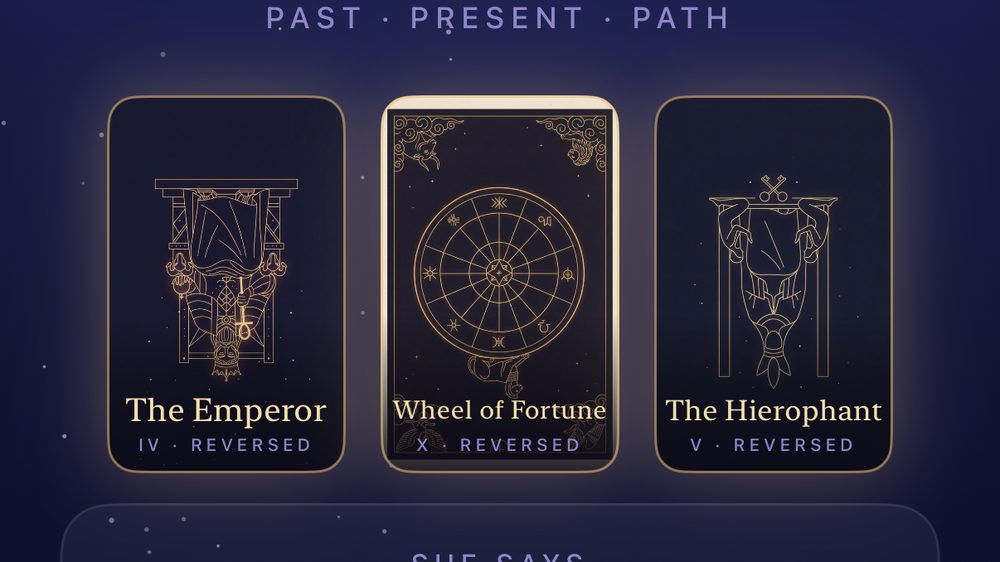
Past, Present and Path
Lay three cards left to right. The first is the past: what brought this question into being. The second is the present: where the matter actually stands today, which is usually not where you think it stands. The third is the path: where it goes if nothing is changed.
The third card is not a prophecy. Read it as the direction of travel — the thing that will happen if you keep doing what you are doing. That is what makes the spread useful rather than merely interesting.
Laying them out
Ask the question out loud, or write it down, before you touch the deck. Shuffle until it feels finished — there is no correct number of times, and anyone who tells you otherwise is selling something. Cut the deck once with the hand you do not write with. Take the top three cards and turn them face up left to right, all three at once, before you read any of them.
Turn all three before you read one. A card seen alone will lie to you.
The order in which to trust them
Read the present card first, though it sits in the middle. It is the one you can check against your own life, and it tells you whether the spread has understood the question at all. Then the past, which explains why the present looks the way it does. Then the path — last, and briefly.
Only after all three have been read separately do you read them together. Look at what changes across the row: a court card that becomes a cup, a wand that becomes a sword, three cards of the same suit, or one Major Arcana card among two minor ones. That movement is the actual answer. The individual meanings are only the vocabulary.
Reversed cards
Decide before you shuffle whether you are reading reversals, and then keep to it. If you are, read a reversed card as the same card spoken more quietly, delayed, or turned inward — not as its opposite. The Tower reversed is still the Tower; it is a collapse you are managing rather than one that arrives through the roof.
Other ways to use the same three cards
The positions are yours to name, as long as you name them before you draw. Situation, obstacle, advice is the most practical set for a decision. Mind, body, spirit suits a reading about yourself rather than an event. What helps, what hinders, what you have not considered is the one I reach for when someone has already made up their mind and does not know it yet.
Two mistakes worth avoiding
The first is asking again. If you dislike the answer and redraw, you are no longer reading — you are shopping. Sit with the first spread for a day. The second is stacking meanings: three cards, three sentences each, and by the end there is no answer left, only a fog. Say one clear thing per card, then one about the row. Four sentences is a complete reading.
And take it lightly. Cards are for entertainment, and the good ones are for thinking.
Questions people ask
What do the three cards mean in a three card spread?
Most often past, present and path — what brought the question about, where it stands now, and where it is heading if nothing changes.
Can a beginner read a three card spread?
Yes. Three cards is the spread beginners are given first, because it is small enough to hold in your head and large enough to tell a story.
Do reversed cards matter in a three card spread?
Only if you decide before you shuffle that they do. Read a reversal as the same card spoken more quietly, or turned inward — not as its opposite.
Draw three cards with Madame
Shuffle the deck with your own hand and hear the three read in turn.